
Blog
The rules behind the bouquet
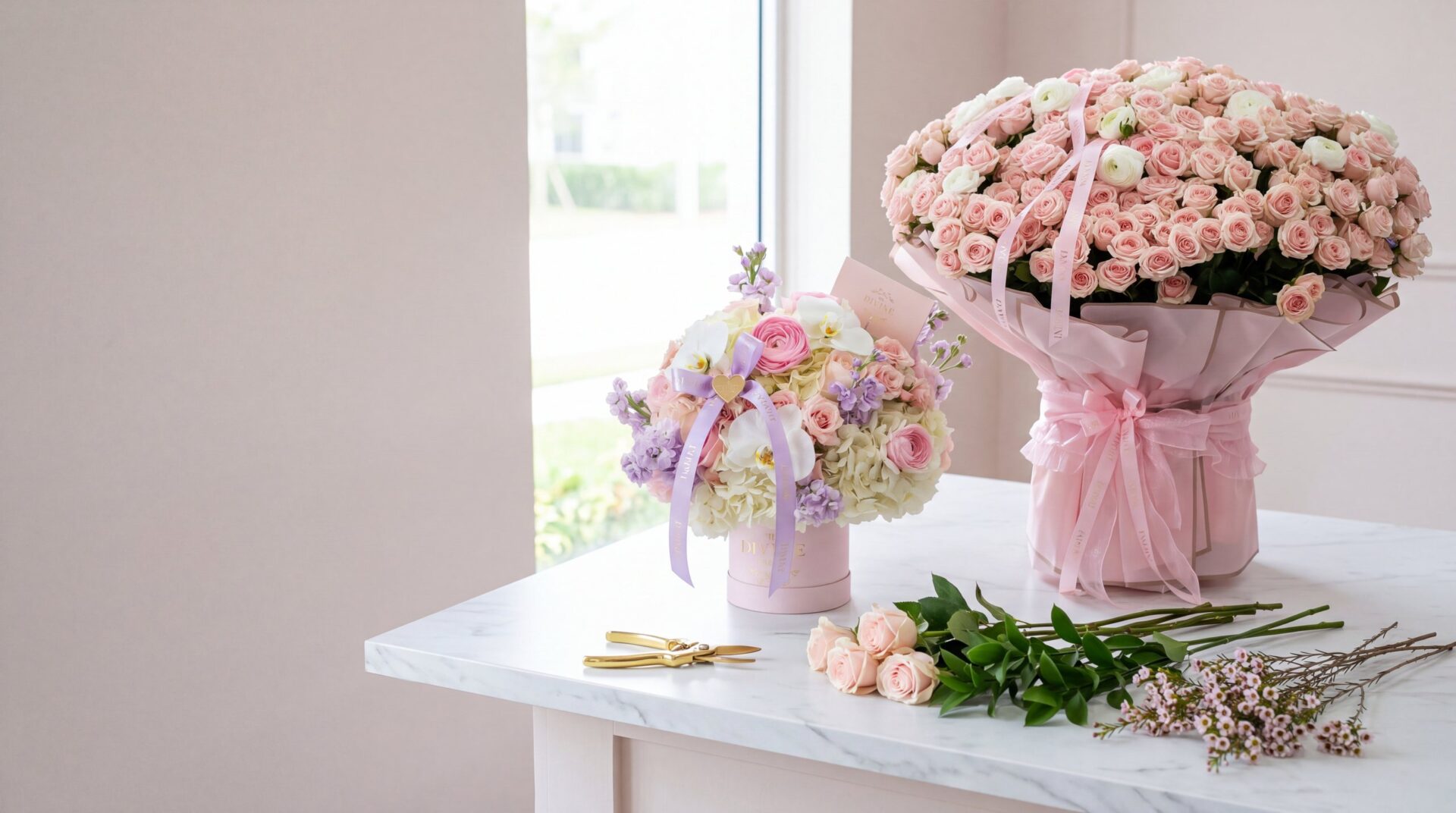
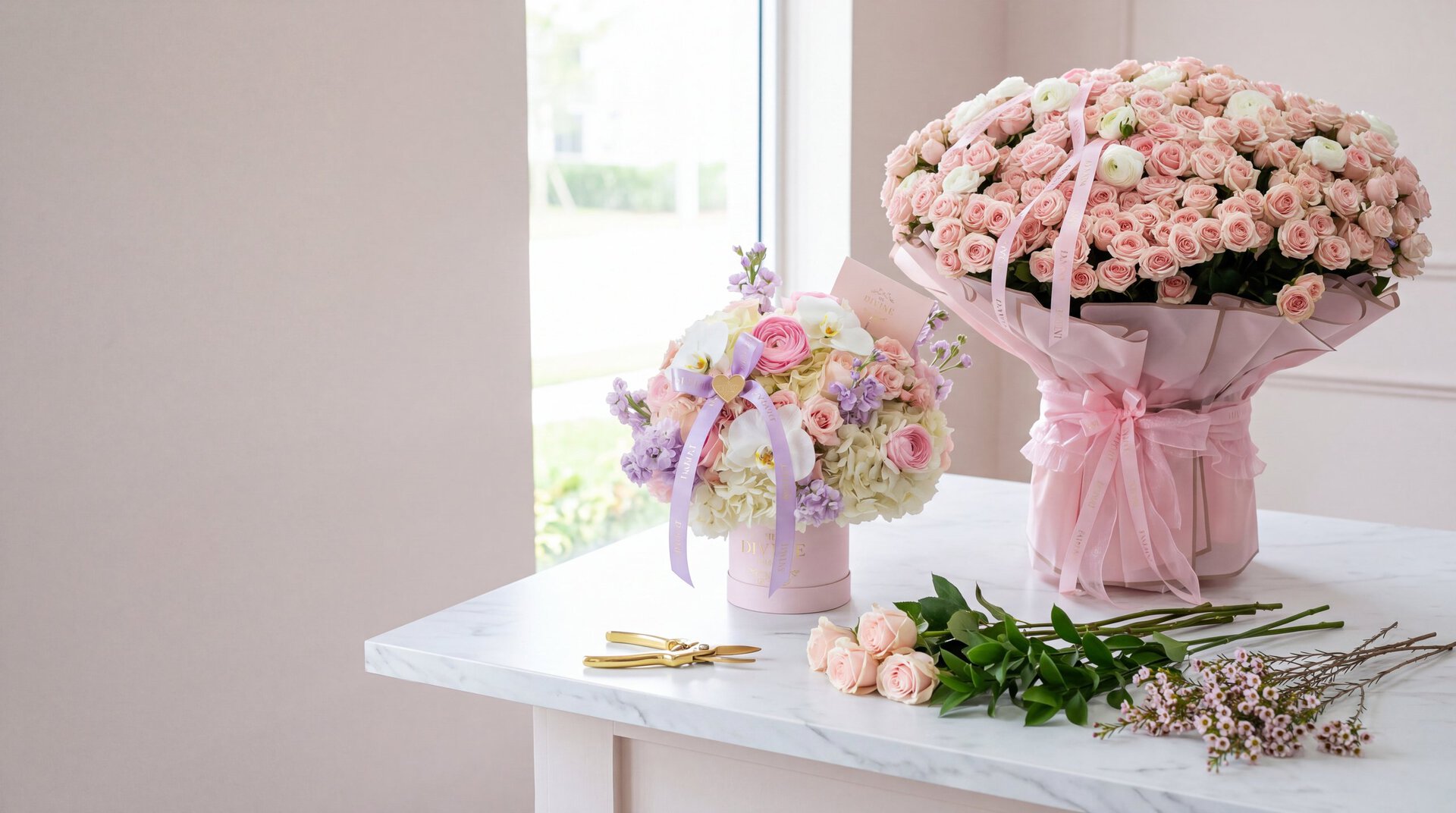
The formulas we use at the design table in our flower shop in Doral.
- Order by 5:00 PM Monday to Friday, or 1:00 PM Saturday, for same-day delivery
- A photo of the finished piece before it leaves
Every trade has its quiet formulas. Ask a florist how a bouquet always ends up looking effortless and balanced, and sooner or later the numbers 3, 5, and 8 come up. Here are the rules we actually use at the design table, and the mixing mistakes we quietly fix before your flowers ever leave the studio.
What is the 3-5-8 rule for florists?
The 3-5-8 rule is a floral design formula: 3 focal flowers, 5 structural greenery stems, and 8 filler blooms. Built on consecutive Fibonacci numbers, it mimics proportions the eye reads as natural, keeps a bouquet from looking crowded or sparse, and scales up (6-10-16) for larger pieces.
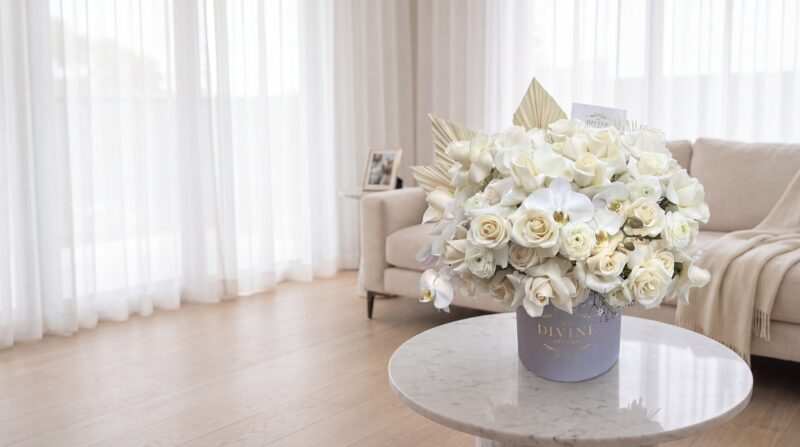
The 3 focal flowers are the statement blooms that draw the eye first: roses, peonies, orchids. The 5 greenery stems build the architecture the piece hangs on. The 8 fillers add texture and close the gaps without competing for attention.
What flowers should not be in a bouquet?
Avoid flowers that sabotage the vase: daffodils leak sap that poisons other stems, hydrangeas collapse without constant water, poppies shatter within hours, and lily pollen stains fabric permanently. A good florist either conditions these separately or designs around them.
What flowers should not be mixed together?
Never mix fresh-cut daffodils with anything: their sap blocks water uptake and shortens the life of roses, tulips, and hyacinths (condition them alone for 24 hours first). Also separate tulips from woody stems, since tulips keep growing after cutting and bend the design out of shape.
Why should you not put red and white flowers together?
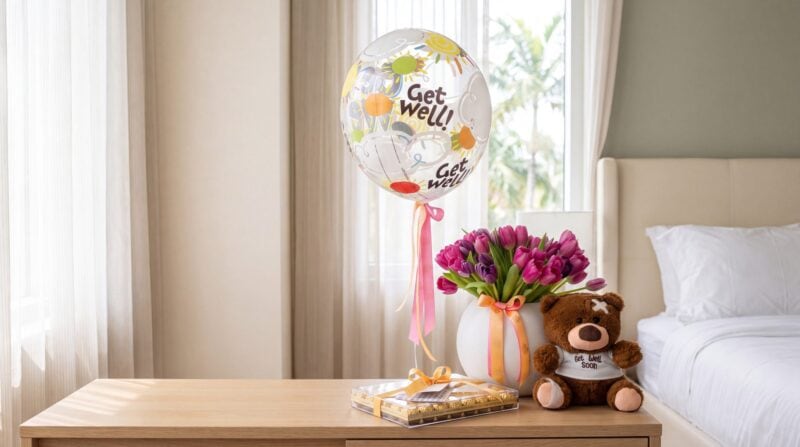
In hospital tradition, especially in the UK and parts of Asia, red and white flowers together symbolize blood and bandages, an old superstition about death. For weddings and events the combination is stunning; for get-well flowers we steer clients toward warmer palettes.
Sending flowers to a patient in Miami? Here is our guide to get-well flowers and hospital delivery.
What flowers do florists use most?
Roses, carnations, chrysanthemums, lilies, and hydrangeas are the industry workhorses: long-lasting, available year-round, and versatile across styles. Accents like alstroemeria, baby’s breath, and lisianthus fill and soften nearly everything else.
That is the industry answer. Our own bench tells a slightly different story: at our Miami studio, the five flowers we reach for most are hydrangeas, roses, spray roses, ranunculus, and orchids. Fewer fillers, more focal blooms. It is a luxury-design bias, and we own it.
What flowers last longest in bouquets?
Chrysanthemums, carnations, alstroemeria, and orchids routinely last two weeks or more with fresh water. Roses average 7 to 10 days. If you want months instead of weeks, preserved roses hold a year or more.
Curious how that works? See our guide to preserved roses in Miami.
What is the best flower to use in a wedding bouquet?
Roses remain the safest premium choice for a wedding bouquet: they photograph beautifully, survive a full day out of water, and come in every palette.
Planning a wedding? Start with our wedding flowers page or request a wedding flower quote.
What two flowers look good together?
Some pairings simply never miss, and the trick is always the same: one dominant bloom, one supporting texture, never two divas in the same vase. These are the three combinations our designer reaches for most at the studio:
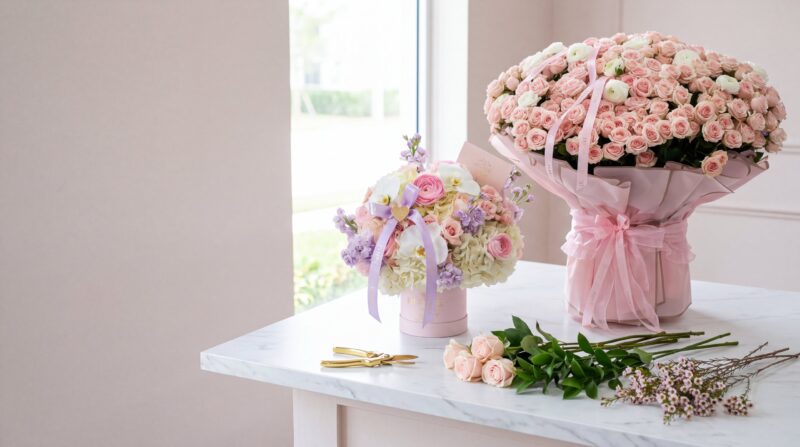
- Roses and spray roses. The same flower at two scales: the large heads command attention while the sprays fill every gap with the same softness, so the piece reads full from any angle.
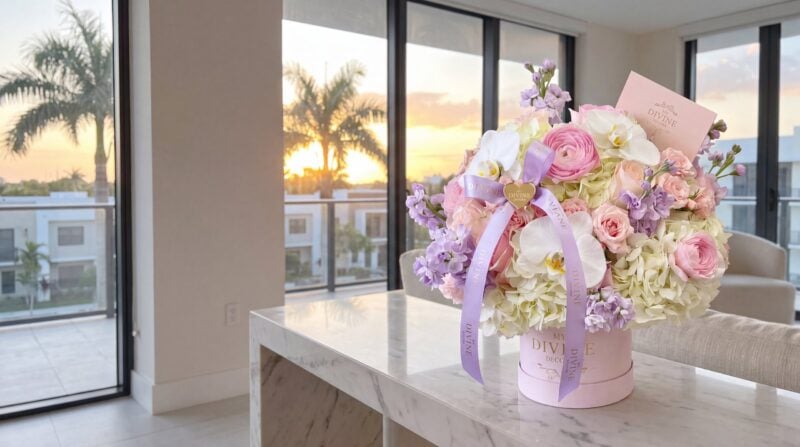
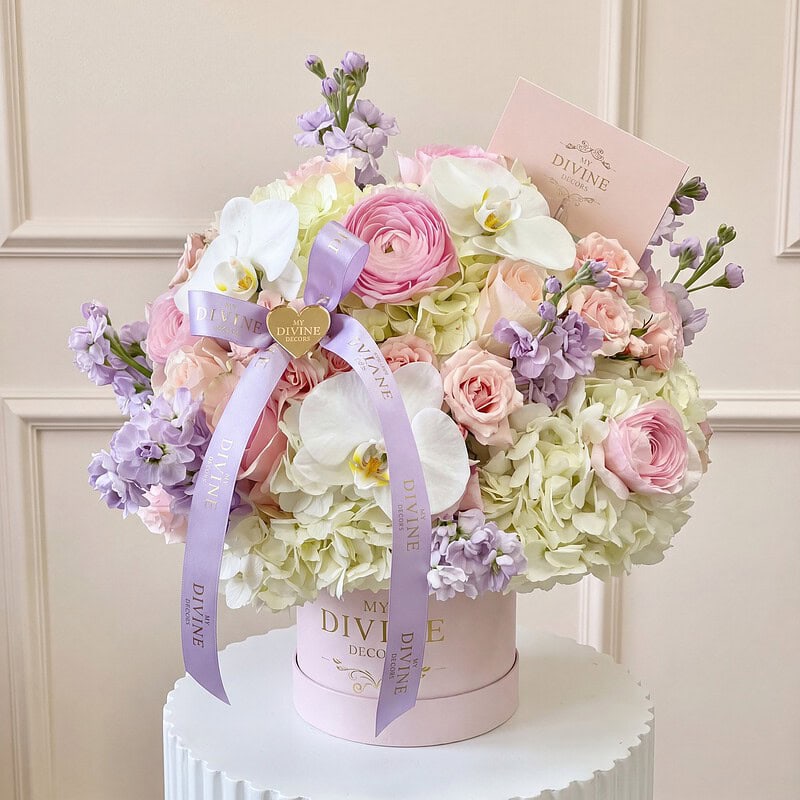
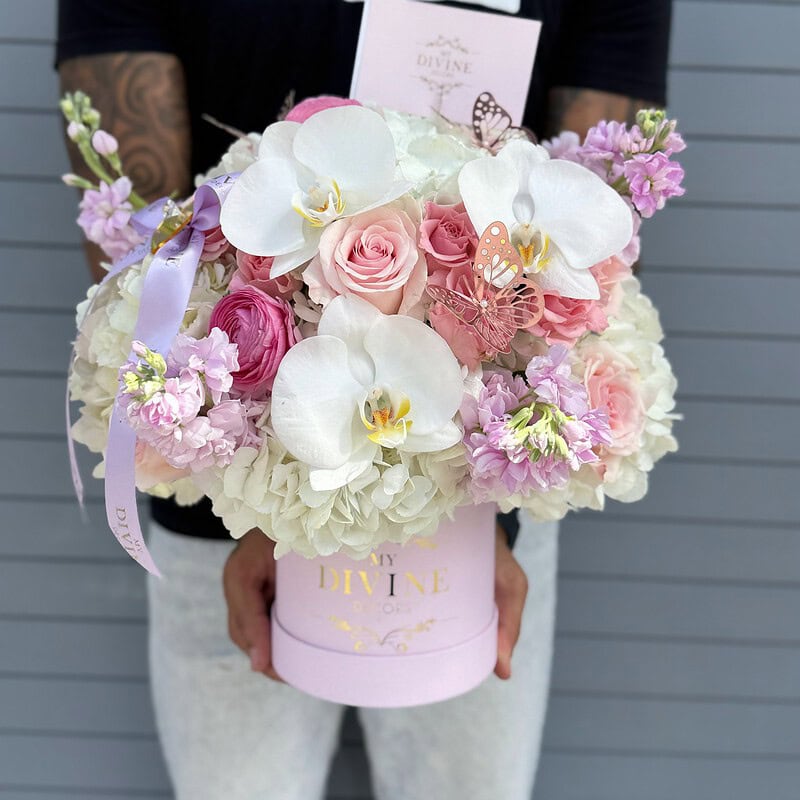
- Ranunculus and hydrangeas. The hydrangea builds a lush cloud of a base and the ranunculus float above it with their paper-tight spirals. Volume plus detail.
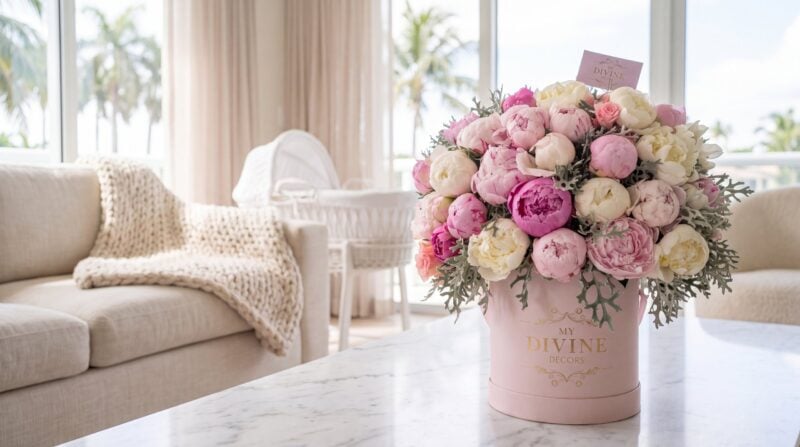
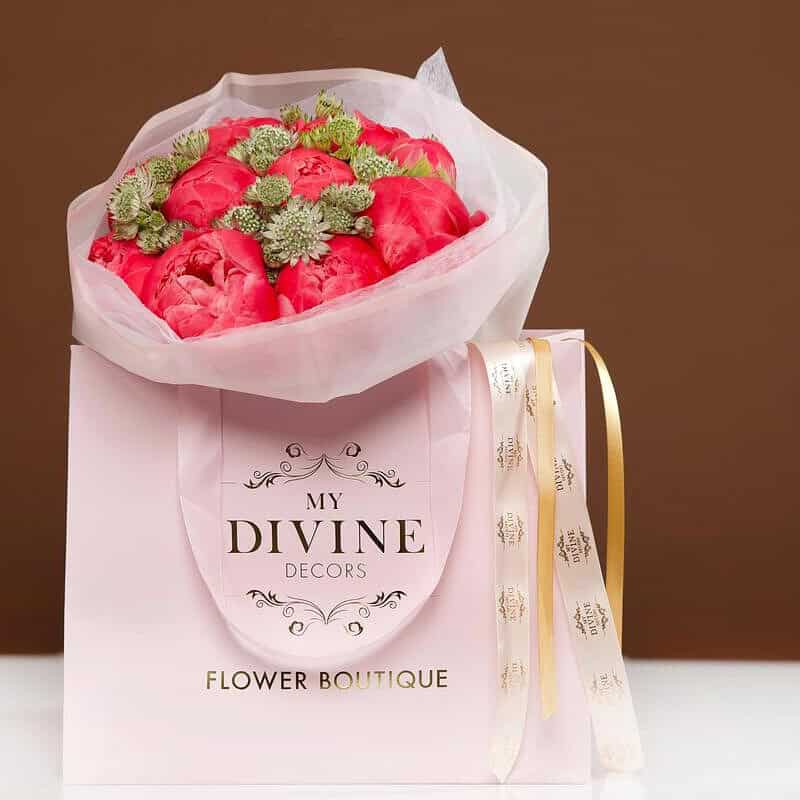
- Peonies and wax flower. One enormous romantic bloom, one tiny wiry accent. The wax flower gives the peony room to breathe and makes it look even bigger.
The pairings, built at our studio
The combinations above, as our clients order them, each with its price.
To see those rules at work, browse the bouquets we design in our flower shop in Doral.
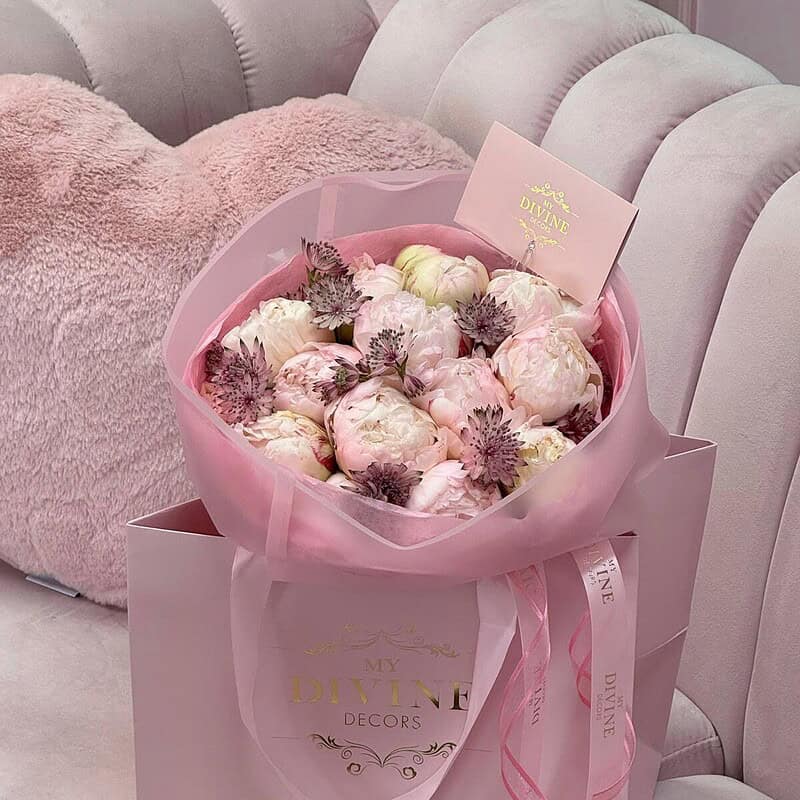
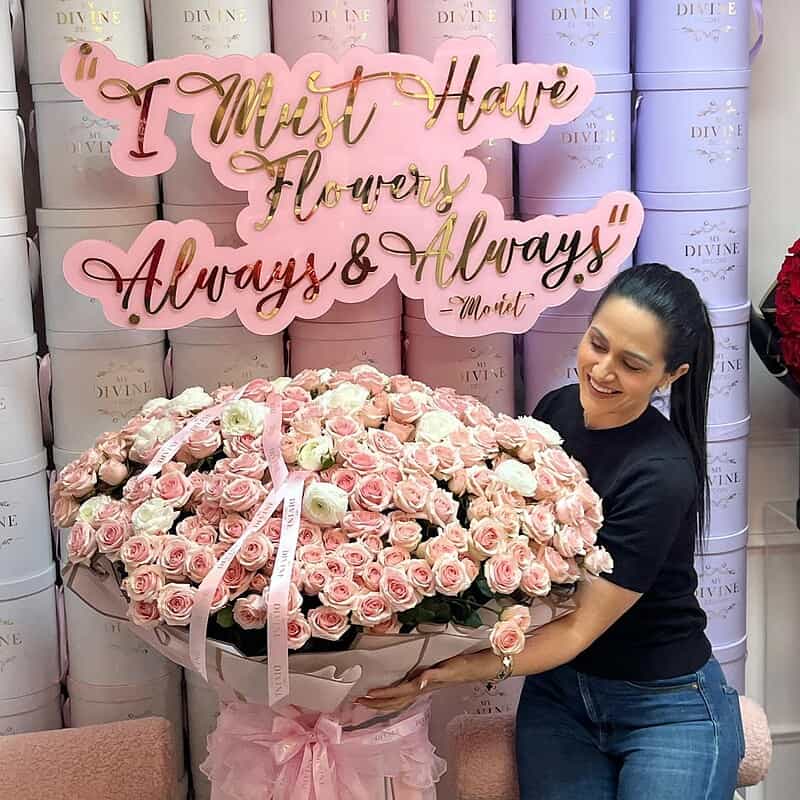
Peonies Bouquet in Signature Bag
$200.00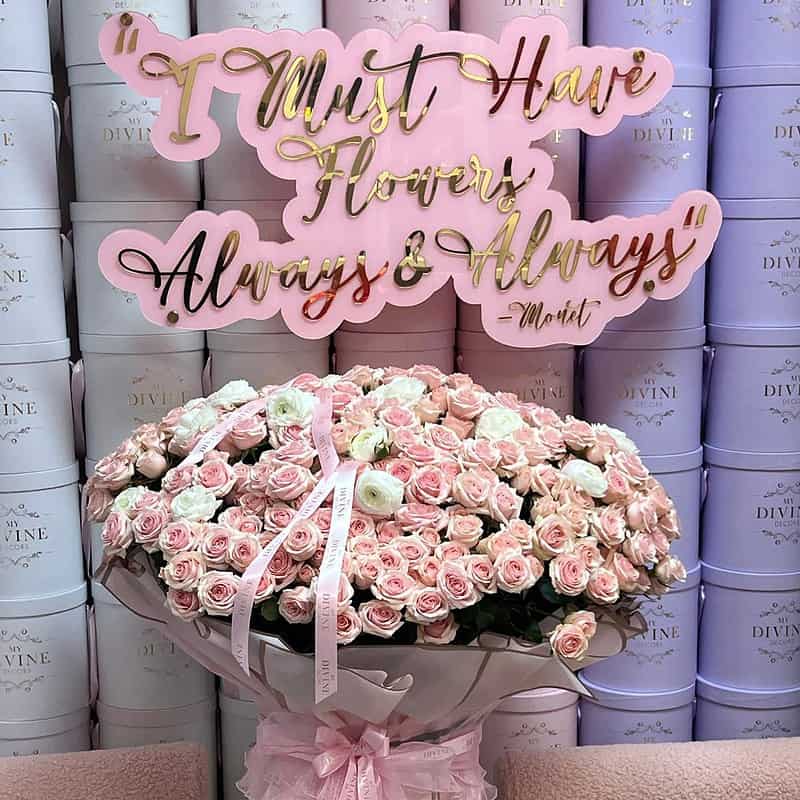
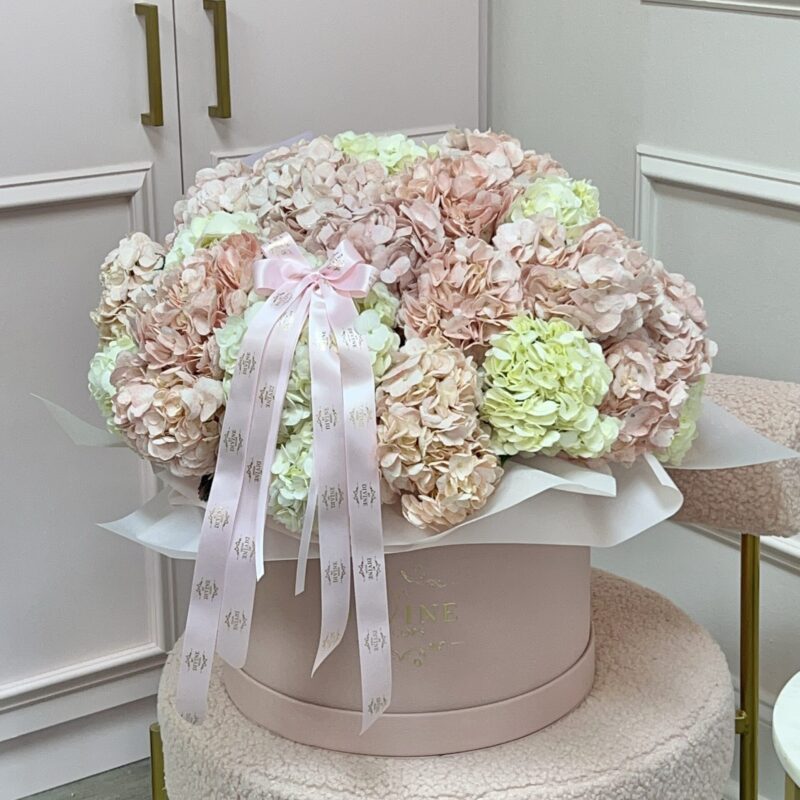
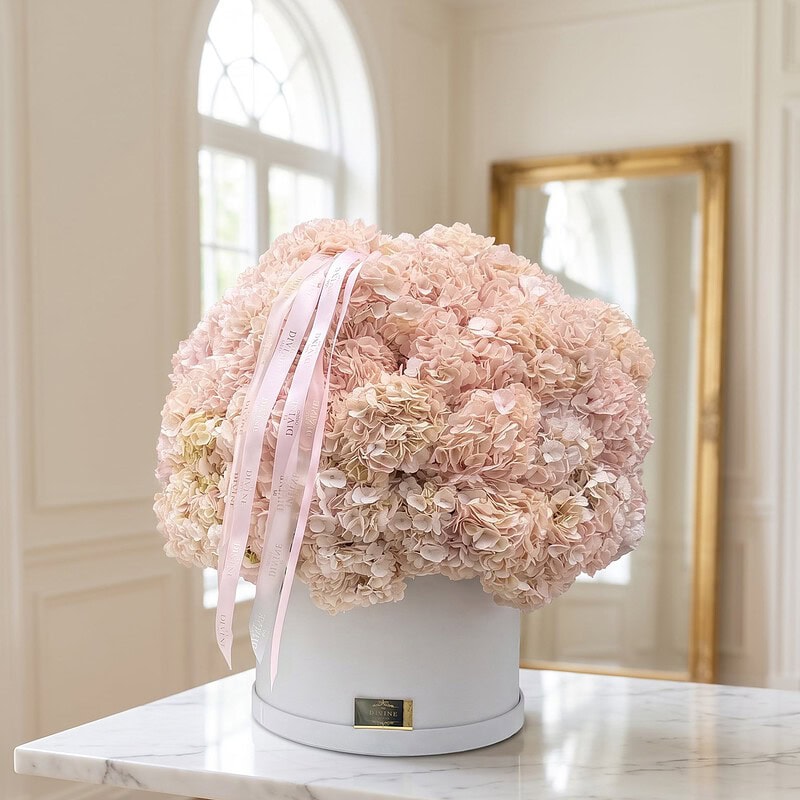
In Love with Hydrangeas Grand Box
Price range: $240.00 through $549.00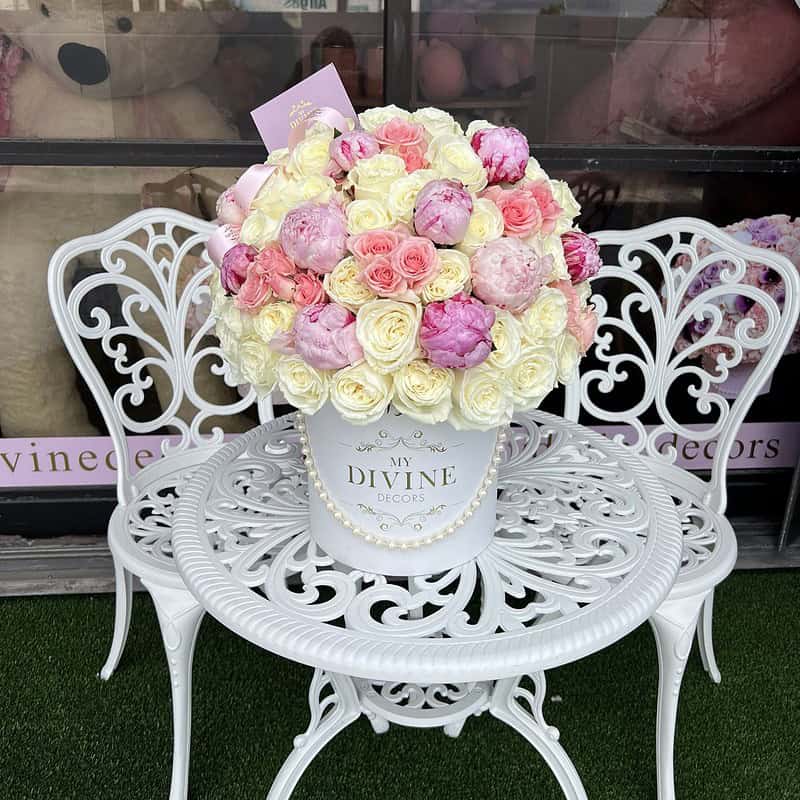
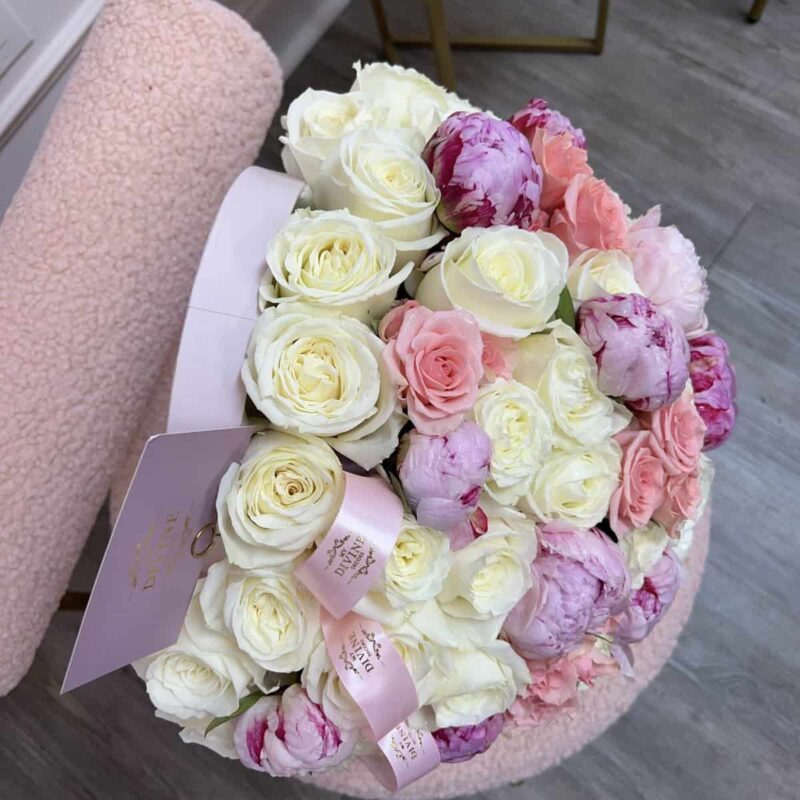
Daniela Roses & Peonies Hat box
$360.00
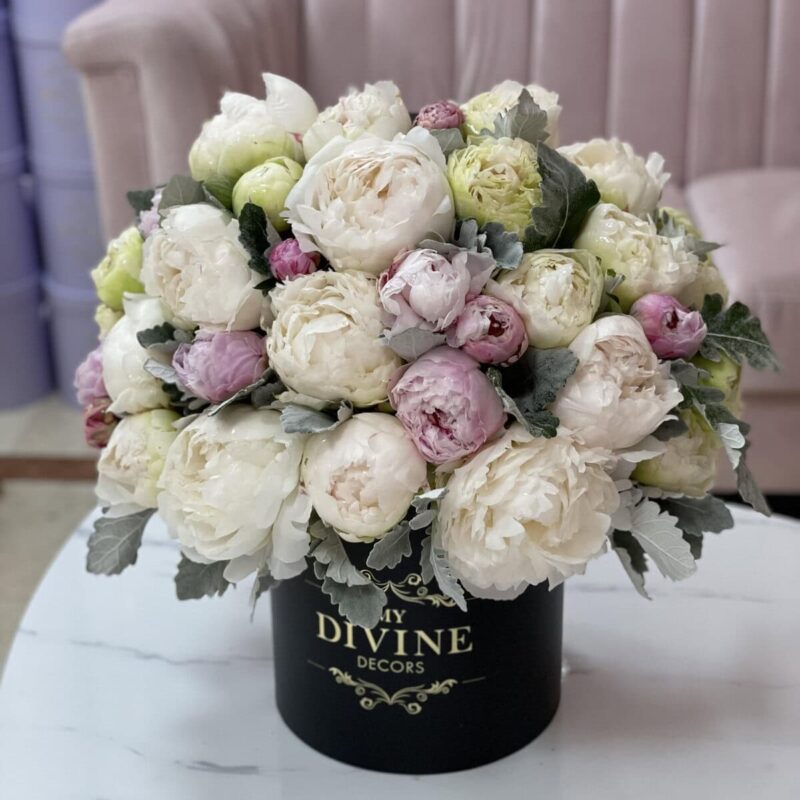
Peonies Luxury Box
$680.00What flower is called the poor man’s rose?
The carnation earned the nickname “the poor man’s rose” for delivering a rose-like look at a fraction of the price. Modern florists have reclaimed it: massed in a single color, carnations read as lush, contemporary, and anything but cheap.
These are the rules. The exceptions are where the fun is, and that part we handle in person: talk to us or browse our Miami flower shop.
Make My Divine Decors a preferred source on Google and see more of what we publish about flowers.